How to Plan a 4 Day Golden Triangle Tour from Delhi?
Planning a short trip to India can be exciting, especially when you want to experience the country’s famous historical monuments, colorful markets, rich culture, and traditional cuisine in a limited amount of time. The Golden Triangle is one of the most popular travel routes for first-time visitors because it connects three iconic destinations: Delhi, Agra, and Jaipur.
A 4 Day Golden Triangle Tour from Delhi provides enough time to explore the major highlights of all three cities while maintaining a practical travel schedule. The classic route generally follows Delhi → Agra → Jaipur → Delhi, making it convenient for travelers arriving in the Indian capital and returning there at the end of the journey.
With a private car, professional driver, carefully selected hotels, and a well-planned sightseeing schedule, you can experience famous attractions such as the Taj Mahal, Agra Fort, Amber Fort, City Palace, Hawa Mahal, India Gate, Qutub Minar, and other cultural landmarks.
Why Choose a 4-Day Golden Triangle Tour from Delhi?
The Golden Triangle is ideal for travelers who want to see several major Indian destinations without spending two weeks on the road. Delhi introduces you to India's historic and modern sides, Agra is home to the Taj Mahal, and Jaipur offers magnificent forts, palaces, markets, and Rajasthani culture.
Four days provide a useful balance between sightseeing and travel. Instead of rushing through all three cities in only two or three days, you can dedicate meaningful time to each destination.
A private tour also allows you to adjust the itinerary according to your interests. Couples may want more photography opportunities, families may prefer a relaxed schedule, while history enthusiasts can spend additional time at forts and monuments.
Suggested 4-Day Golden Triangle Itinerary
A well-planned 4 Day Golden Triangle Tour normally starts and finishes in Delhi. The itinerary below is designed to cover the main attractions without making every day unnecessarily exhausting.
Day 1: Explore Delhi and Travel to Agra
Start your journey in Delhi with a morning pickup from your hotel, airport, or another convenient location. Depending on your arrival time, you can explore some of the city's most important attractions before continuing toward Agra.
Delhi offers a combination of historic monuments, colonial architecture, religious sites, and lively neighborhoods. Popular attractions include:
- Qutub Minar
- Humayun’s Tomb
- India Gate
- Red Fort
- Jama Masjid
- Raj Ghat
- Lotus Temple
- Parliament area
Because the first day includes travel to Agra, it is better to select a manageable number of attractions rather than attempting to see everything.
Qutub Minar is an excellent choice for travelers interested in medieval Indian architecture. Humayun’s Tomb is another important monument and is known for its impressive Mughal architecture and landscaped gardens.
India Gate provides a contrasting experience, representing the monumental architecture of New Delhi.
After sightseeing, continue by road toward Agra. The journey is generally comfortable by private car, allowing you to stop for refreshments along the way.
After reaching Agra, check into your hotel and relax. If you still have time and energy, you can visit Mehtab Bagh for a view of the Taj Mahal from across the Yamuna River.
Spend the night in Agra.
Day 2: Taj Mahal, Agra Fort and Journey to Jaipur
Day two is one of the most memorable parts of the trip because it includes a visit to the Taj Mahal.
Start your morning early and visit the Taj Mahal. The monument is particularly popular in the morning because of the softer light and cooler temperatures compared with the middle of the day.
Take time to appreciate the white marble architecture, gardens, decorative details, and surrounding complex. Photography enthusiasts should allow enough time to capture different perspectives of the monument.
After visiting the Taj Mahal, return to your hotel for breakfast.
Visit Agra Fort
Continue your sightseeing with Agra Fort, another major historical attraction in the city. The massive red sandstone complex contains palaces, courtyards, halls, mosques, and other structures associated with Mughal history.
A professional guide can make the visit more interesting by explaining the history behind the fort and its connection with the Mughal emperors.
If time permits, you can also visit Itmad-ud-Daulah, often called the Baby Taj. Its detailed marble decoration makes it an attractive addition for architecture and photography lovers.
Travel from Agra to Jaipur
After exploring Agra, continue toward Jaipur.
One of the advantages of traveling by private car is the ability to include a stop at Fatehpur Sikri along the route. This historic Mughal-era city features impressive structures and provides an opportunity to add another heritage site to your journey.
After arriving in Jaipur, check into your hotel.
In the evening, explore a local market or enjoy a traditional Rajasthani dinner. Jaipur is famous for handicrafts, textiles, jewelry, blue pottery, block printing, and traditional clothing.
Spend the night in Jaipur.
Day 3: Discover the Highlights of Jaipur
Day three is dedicated to exploring Jaipur, commonly known as the Pink City.
Start with Amber Fort, one of the city's most famous attractions. Located on a hill outside the central city area, the fort combines Rajput and Mughal architectural influences.
Its courtyards, gateways, palaces, and decorative interiors provide excellent opportunities for photography and sightseeing.
After Amber Fort, continue toward the city center.
City Palace
City Palace is another important Jaipur attraction. The complex contains courtyards, museums, royal residences, and decorative architecture.
Visitors can learn about Jaipur's royal heritage while viewing traditional costumes, weapons, manuscripts, artwork, and other historical objects.
Jantar Mantar
Next, visit Jantar Mantar, a historic astronomical observatory featuring large stone instruments designed to measure celestial movements.
It is particularly interesting for travelers who enjoy science, architecture, and history.
Hawa Mahal
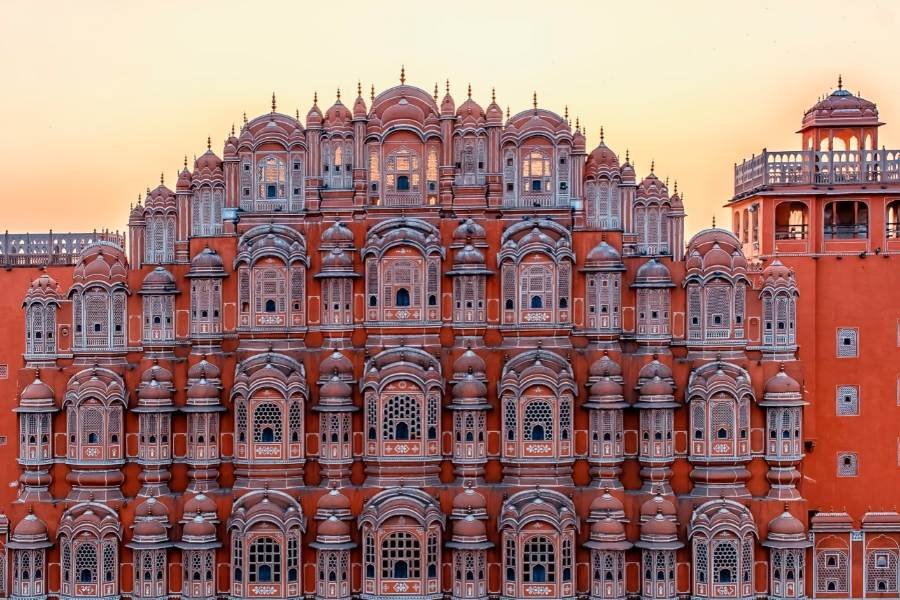
No Jaipur visit is complete without seeing Hawa Mahal.
The famous Palace of Winds is recognized for its distinctive honeycomb-like façade containing numerous small windows. The exterior is one of Jaipur's most photographed landmarks.
You can also explore nearby markets where you may find handicrafts, textiles, jewelry, souvenirs, and traditional Rajasthani products.
End the day with a local dinner or a relaxed evening at your hotel.
Day 4: Jaipur Sightseeing and Return to Delhi
The final day begins with breakfast and any remaining Jaipur sightseeing.
Depending on your interests and departure time, you can visit a local market, explore additional attractions, or simply enjoy a relaxed morning.
Afterward, begin your road journey from Jaipur to Delhi.
The drive can take several hours depending on traffic and road conditions, so it is important to plan your departure according to your onward flight, train, or hotel check-in.
Travelers with late departures can sometimes include an additional Jaipur attraction before leaving the city.
Your 4 Day Golden Triangle Tour ends in Delhi, where you can be dropped at your hotel, airport, railway station, or another preferred location.
Best Way to Travel: Private Car and Driver
For a short Golden Triangle itinerary, transportation plays an important role.
A private car with an experienced driver can provide several practical benefits. You do not have to coordinate multiple public transportation connections, and the itinerary can be adjusted according to your schedule.
Private transportation also makes it easier to travel with luggage between Delhi, Agra, and Jaipur.
You can choose a vehicle according to the size of your group, such as a comfortable sedan for couples or a larger vehicle for families and small groups.
A private driver can also help with navigation, parking, and finding convenient stops during longer road journeys.
Should You Hire a Professional Tour Guide?
A professional guide can add historical and cultural context to your sightseeing.
At monuments such as the Taj Mahal, Agra Fort, Amber Fort, and City Palace, a guide can explain the background of the buildings, important rulers, architectural features, and stories associated with each destination.
Travelers who prefer independent exploration can also visit the monuments on their own and use a guide only at selected attractions.
The choice depends on your travel style and budget.
Where Should You Stay?
Choosing convenient hotels can make a significant difference during a four-day itinerary.
In Delhi, consider staying in an area with good access to major roads and transportation connections.
In Agra, staying relatively close to the Taj Mahal can be convenient, particularly if you plan to visit the monument early in the morning.
In Jaipur, choose a hotel with convenient access to the main attractions and markets. Depending on your preferences, you can select a heritage hotel, boutique property, or modern hotel.
For a short trip, spending too much time traveling between your hotel and sightseeing locations can reduce the amount of time available for exploration.
Best Time to Plan the Golden Triangle Tour
The Golden Triangle can be visited throughout much of the year, but weather can significantly influence your experience.
The period from October through March is generally popular because temperatures are more comfortable for sightseeing.
Winter mornings can be cool, particularly in Delhi and Agra, so light layers can be useful.
April through June can be very hot, especially during the afternoon. If traveling during warmer months, schedule outdoor sightseeing during the morning and later afternoon whenever possible.
The monsoon season can bring rainfall and increased humidity. Rain can occasionally affect road travel and outdoor sightseeing, although the landscape can also appear greener during this period.
What to Pack for a 4-Day Golden Triangle Trip?
Packing light is useful because you will change cities during the journey.
- Comfortable walking shoes
- Lightweight clothing
- Sunglasses
- Sunscreen
- A reusable water bottle
- Personal medicines
- Phone and camera chargers
- Power bank
- Light jacket during cooler months
- Identification and travel documents
Modest clothing can also be useful when visiting religious sites and traditional areas.
Food to Try During the Tour
Food is an important part of the Golden Triangle experience.
Delhi is known for its diverse food scene, including Mughlai cuisine, kebabs, parathas, chaat, and numerous regional Indian dishes.
Agra has strong Mughal culinary influences. Travelers can try local sweets and traditional North Indian dishes during their stay.
Jaipur is particularly known for Rajasthani cuisine. Popular dishes include dal baati churma, gatte ki sabzi, ker sangri, and various traditional sweets.
Choose reputable restaurants and maintain normal food and water precautions during your trip.
Shopping in Delhi, Agra and Jaipur
Each city offers different shopping experiences.
Delhi has everything from modern shopping centers to traditional markets offering clothing, handicrafts, spices, and souvenirs.
Agra is known for marble handicrafts, leather products, textiles, and Taj Mahal-inspired souvenirs.
Jaipur is particularly popular for jewelry, textiles, block-printed fabrics, blue pottery, handicrafts, and traditional clothing.
When shopping for expensive handicrafts or jewelry, compare prices and product quality before purchasing.
How to Make the Tour More Comfortable
A four-day itinerary can be busy, so smart planning is important.
First, avoid adding too many attractions to each day. Focus on the major landmarks and leave some flexibility for traffic, meals, photography, and unexpected delays.
Second, start sightseeing early when possible. Morning visits can be more comfortable, particularly during warmer seasons.
Third, keep your luggage organized because you will be moving between three cities.
Finally, communicate your preferred sightseeing pace with your driver or tour operator before starting the trip.
Can You Add Ranthambore to a Four-Day Tour?
Ranthambore is an attractive option for wildlife enthusiasts, but adding it to a four-day Golden Triangle itinerary can make the journey considerably faster paced.
If wildlife and tiger safaris are a major priority, consider extending the trip to five or six days.
A longer itinerary can follow a route such as Delhi → Agra → Ranthambore → Jaipur → Delhi.
This provides more time for wildlife activities while still allowing you to experience the main Golden Triangle destinations.
Who Is This Tour Suitable For?
A four-day Golden Triangle itinerary can work well for several types of travelers.
First-Time Visitors
First-time visitors can experience three of India's most famous destinations within a relatively short holiday.
Couples
Couples can combine historical sightseeing with romantic experiences such as an early Taj Mahal visit, heritage hotels, and private travel.
Families
Families can benefit from private transportation because they can manage their own schedule and take breaks when needed.
Small Groups
Friends and small groups can share transportation and customize the itinerary according to their common interests.
Business Travelers
Travelers visiting Delhi for business who have limited additional vacation time can use the Golden Triangle as a short cultural extension.
Tips for Planning Your Golden Triangle Tour
Before booking your trip, keep the following points in mind:
- Decide whether you want private transportation or shared travel.
- Choose hotels according to location as well as price.
- Plan major monument visits in advance.
- Leave extra time for road traffic.
- Carry comfortable footwear.
- Keep your daily sightseeing schedule realistic.
- Consider hiring professional guides at major monuments.
- Check monument schedules before your visit.
- Keep copies of important travel documents.
- Allow some free time for shopping and local experiences.
These simple steps can make the trip more comfortable and enjoyable.
Final Thoughts
A well-organized 4 Day Golden Triangle Tour from Delhi offers an excellent introduction to India's history, architecture, culture, cuisine, and everyday life. The route connects Delhi's historic landmarks, Agra's world-famous Taj Mahal, and Jaipur's magnificent forts and palaces.
The key to making the most of four days is balancing sightseeing with travel time. A private car and driver, centrally located hotels, early starts, and a carefully selected list of attractions can help you experience the highlights without making the journey unnecessarily stressful.
Whether you are traveling as a couple, family, group of friends, or solo traveler, the Golden Triangle provides a compact introduction to some of India's most recognizable destinations. With thoughtful planning, four days can create a memorable journey through Delhi, Agra, and Jaipur.
Frequently Asked Questions
Is 4 days enough for the Golden Triangle?
Yes, four days can be enough to visit the major highlights of Delhi, Agra, and Jaipur. However, the itinerary will be relatively active. Travelers who prefer a slower pace may want to extend the trip.
What is the route for the Golden Triangle from Delhi?
The traditional route is Delhi → Agra → Jaipur → Delhi. This creates a practical circuit and covers the three primary destinations.
How many nights are needed for the Golden Triangle?
A four-day itinerary commonly includes one night in Agra and two nights in Jaipur, with Delhi used as the starting and ending point. The exact arrangement can be adjusted according to flight and hotel schedules.
Is a private car useful for the Golden Triangle?
Yes. A private car can make the journey between Delhi, Agra, and Jaipur more convenient, particularly for families, couples, and small groups who want flexibility.
Can I include Fatehpur Sikri?
Yes. Fatehpur Sikri can be included between Agra and Jaipur if your schedule allows. It is particularly convenient when traveling by private road transportation.
Can I add Ranthambore?
Ranthambore can be added, but it is better suited to a longer itinerary. Adding an extra day or two allows more time for wildlife safaris and reduces the pressure of the overall schedule.
What are the main attractions on the Golden Triangle route?
Major attractions include Qutub Minar and India Gate in Delhi, the Taj Mahal and Agra Fort in Agra, and Amber Fort, City Palace, Hawa Mahal, and Jantar Mantar in Jaipur.
Is the Golden Triangle suitable for first-time visitors to India?
Yes. Delhi, Agra, and Jaipur provide exposure to major historical monuments, architecture, cuisine, markets, and cultural experiences, making the route a popular introduction to northern India.