Golden Triangle Tour 4 Days: Complete Delhi Agra Jaipur Itinerary
India can feel almost impossible to experience in just four days. There is simply too much history, architecture, food, culture, and everyday life packed into the country. Yet, if you want a short introduction to northern India, Delhi, Agra, and Jaipur create one of the most practical and rewarding routes you can choose. Together, these three cities form India's famous Golden Triangle, connecting Delhi's historic and modern character with Agra's Mughal heritage and Jaipur's royal Rajasthani atmosphere.
A Golden Triangle Tour 4 Days itinerary gives you something important that a three-day trip cannot always provide: breathing room. Instead of rushing from one monument to another, you have more opportunity to explore Delhi, spend meaningful time around the Taj Mahal and Agra Fort, travel comfortably toward Jaipur, and experience the Pink City's major attractions without turning every day into a race. The extra day also gives you greater flexibility when traffic, weather, queues, or unexpected delays affect your schedule.
The route in this guide follows Delhi → Agra → Jaipur, which is particularly convenient for travelers arriving in Delhi and departing from Jaipur. However, you can reverse the itinerary if your flights or onward travel make Jaipur a better starting or finishing point. The objective is simple: experience the major attractions while leaving enough time to actually enjoy the journey.
Why Choose a 4-Day Golden Triangle Tour?
Four days is a useful middle ground for travelers who want more than a quick introduction but cannot spend a full week exploring northern India. With three days, you can visit the highlights, but the schedule tends to be tightly packed. Four days allow you to divide Delhi sightseeing more sensibly, spend an overnight in Agra, and dedicate a full day to Jaipur.
The appeal of the Golden Triangle comes from the contrast between its destinations. Delhi feels like several centuries of Indian history layered on top of one another. Agra takes you deeper into the Mughal period, with the Taj Mahal and Agra Fort forming the centerpiece of the experience. Jaipur then changes the visual language completely, introducing grand Rajput architecture, colorful markets, palace courtyards, and the distinctive pink tones for which the city is famous.
Rajasthan Tourism identifies Jaipur as one of the three corners of the Golden Triangle and describes the city as a planned historic capital founded in 1727. Its official tourism information also highlights Amber Palace, Hawa Mahal, Jantar Mantar, and the City Palace among the city's major attractions.
The additional day is particularly valuable for first-time visitors because it reduces the feeling that you are constantly packing, checking out, and getting back into a vehicle. You still have a relatively fast-paced journey, but there is enough space to slow down.
Day 1: Arrive in Delhi and Explore the Capital
Your first day begins in Delhi, India's enormous capital and the gateway to the Golden Triangle. Depending on your arrival time, you can either devote the day to sightseeing or use the first part of the day to check into your hotel and recover from your journey.
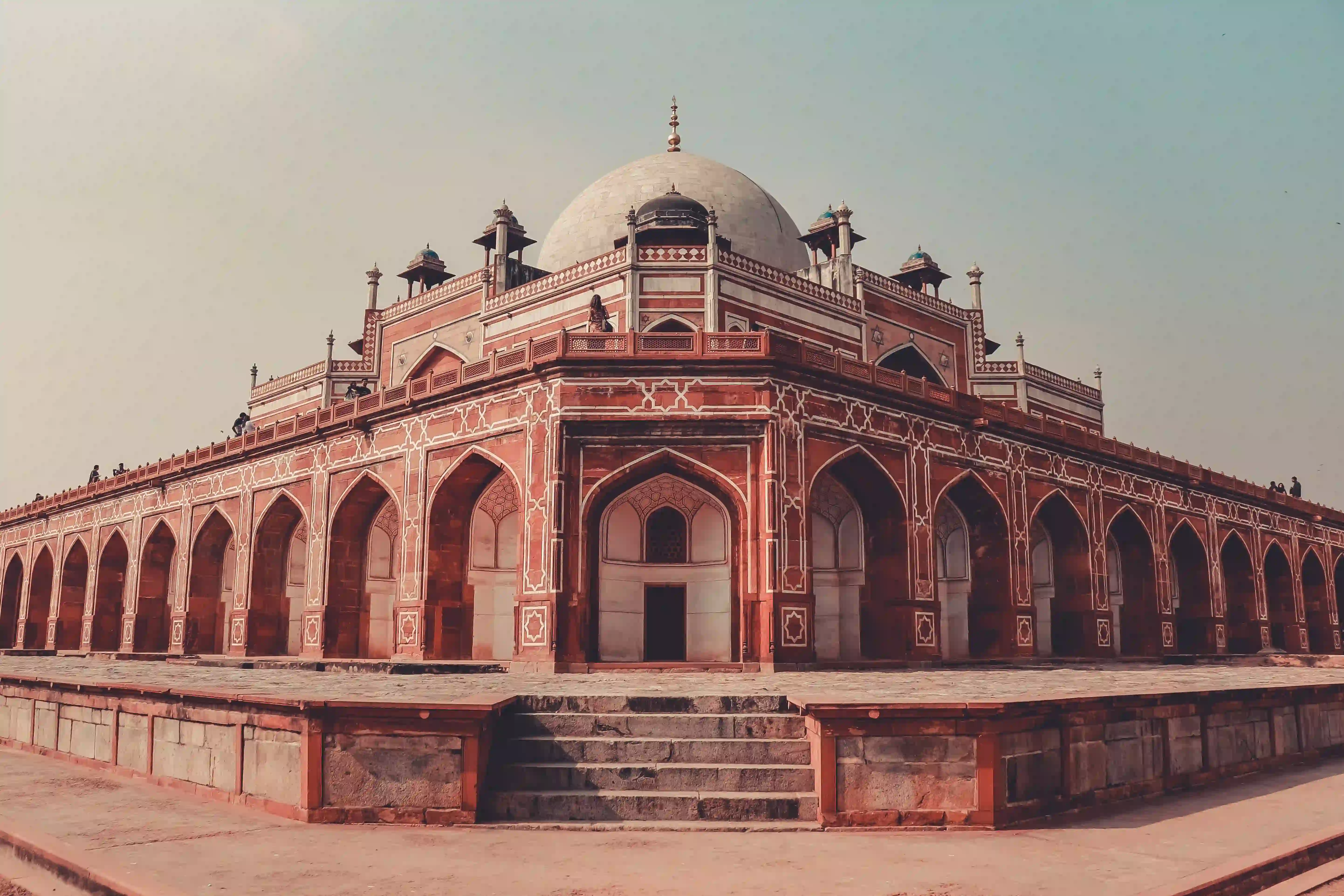
If you arrive in the morning, avoid trying to see every famous monument. Delhi is simply too large for that. Instead, choose attractions that match your interests and are geographically sensible. A good introductory combination might include Humayun's Tomb, India Gate, Qutub Minar, or the Red Fort.
The best part about Delhi is the contrast. You can move from monumental government avenues to centuries-old tombs, busy bazaars, religious sites, and historic neighborhoods within the same afternoon. It is almost like opening a history book where every chapter has been placed next to the previous one.
Morning: Begin with Delhi's Heritage
If you arrive early, start your sightseeing with Qutub Minar or Humayun's Tomb. Qutub Minar is ideal for travelers fascinated by medieval architecture, while Humayun's Tomb provides a beautiful introduction to Mughal garden architecture.
Don't rush through these sites simply to add another attraction to your checklist. Spend time looking at architectural details, courtyards, stonework, inscriptions, gardens, and the way each monument fits into its surroundings.
If your arrival is later in the morning, choose one major monument instead of attempting both. This is where the four-day itinerary becomes useful: you don't need to force an unrealistic schedule simply because there are more attractions you could visit.
Afternoon: India Gate and Central Delhi
After lunch, continue toward central Delhi. India Gate is one of the city's best-known landmarks and can be combined with a drive through the central government district. Depending on your sightseeing preferences and opening schedules, you may also include the President's Estate area from the outside or visit another nearby attraction.
If you are particularly interested in Mughal history, you could instead visit the Red Fort. The massive red sandstone complex provides a very different experience from the more intimate atmosphere of Humayun's Tomb.
The important thing is to leave room for Delhi traffic. A journey that looks short on a map can take considerably longer during busy periods. Your itinerary should therefore be based on realistic travel time rather than simply counting kilometers.
Evening: Experience Delhi's Food and Markets
Your first evening is a good opportunity to experience Delhi beyond its monuments. Depending on where you stay, you can explore a local market, enjoy Indian cuisine, or simply relax at your hotel.
Delhi's food scene is incredibly diverse. You can find everything from North Indian classics to regional Indian cuisines, street food, international restaurants, and contemporary dining.
If this is your first visit, don't feel pressured to spend the entire evening sightseeing. You have three more days ahead, and the journey will be considerably more enjoyable if you begin with enough energy.
Day 2: Delhi to Agra and Mughal Heritage
Day two takes you from Delhi toward Agra. This is where the journey begins to feel distinctly different. Delhi is a sprawling modern metropolis, while Agra's tourism identity is strongly connected with the Mughal period and its monumental architecture.
A private vehicle is particularly convenient for this route because you can travel directly from your Delhi hotel to Agra without changing transportation. If you prefer trains, rail travel is another practical option, but you will need to account for station transfers and luggage handling.
Try to leave Delhi early. The earlier you start, the more flexibility you will have once you reach Agra.
Morning: Travel from Delhi to Agra
Have breakfast before departure or take it along the way. Keep water with you and make sure your phone, documents, and camera are easily accessible.
The journey toward Agra provides an interesting transition from Delhi's urban environment into the landscapes surrounding Uttar Pradesh. Once you reach Agra, check into your hotel or arrange luggage storage if your room is not ready.
Rather than immediately rushing into another monument, take a short break if necessary. Travel fatigue can build quickly when every hour is scheduled.
Afternoon: Agra Fort
After lunch, visit Agra Fort. This enormous red sandstone complex offers a deeper understanding of Mughal political and royal life.
The fort contains palaces, courtyards, halls, mosques, and other architectural elements that reveal how Mughal rulers lived and governed. It also offers viewpoints toward the Taj Mahal, creating an interesting visual connection between two of Agra's most important landmarks.
Agra Fort should not be treated as merely an attraction to tick off before the Taj Mahal. The fort tells a different story. While the Taj Mahal is associated strongly with love, memory, symmetry, and refined decoration, Agra Fort communicates power, administration, defense, and royal life.
Give yourself enough time to explore the complex without constantly checking your watch.
Evening: Mehtab Bagh or Local Agra
If you still have time and energy, consider visiting Mehtab Bagh around sunset. The garden sits across the Yamuna River from the Taj Mahal and provides a different perspective of the famous monument.
Alternatively, you can explore Agra's local markets. Agra is known for handicrafts, marble inlay work, leather goods, textiles, and other traditional products.
Don't feel obligated to spend your entire evening shopping. The most important task is preparing for the next morning.
The Taj Mahal is the centerpiece of many travelers' Agra experience, and an early visit can be one of the most memorable moments of the entire trip.
Day 3: Taj Mahal and Journey to Jaipur
Day three is the transition point between Mughal Agra and royal Jaipur. Begin early with the Taj Mahal, return for breakfast, check out, and then continue toward Jaipur.
The Taj Mahal's official Incredible India tourism page currently lists its opening time as 30 minutes before sunrise and closing time as 30 minutes before sunset, with the monument closed to regular visitors on Fridays. Because operating information can change, check the official information again before your visit.
Sunrise at the Taj Mahal
There is something special about seeing the Taj Mahal early in the morning. The changing light interacts with the white marble, and the atmosphere can be calmer than later in the day.
Arrive prepared for security procedures and allow yourself enough time to enter without rushing. Once inside, don't immediately focus on getting the classic photograph.
Walk through the gardens. Look at the symmetry. Notice the marble screens and decorative inlay. Observe how the monument changes as you move closer.
The Taj Mahal is much more impressive when experienced as architecture rather than simply as a famous photograph.
Take your photographs, but also give yourself a few quiet minutes to simply look at the monument.
Return for Breakfast and Check Out
After visiting the Taj Mahal, return to your hotel for breakfast and prepare for the journey to Jaipur.
If you are traveling by private vehicle, keeping your luggage in the car can make the day much easier. You can visit another attraction without needing to return to the hotel after checking out.
If you are using public transportation, arrange luggage storage or hotel transfer services in advance.
Optional Stop at Fatehpur Sikri
Travelers with enough time may consider a stop at Fatehpur Sikri, the historic Mughal city located between Agra and Jaipur.
However, this should be treated as an optional addition rather than a mandatory stop. A four-day trip gives you more flexibility than a three-day trip, but you still need to protect your arrival time in Jaipur.
If visiting Fatehpur Sikri is important to you, discuss the timing with your driver or tour operator before the journey begins.
Afternoon: Drive Toward Jaipur
Continue toward Jaipur after lunch.
As you approach Rajasthan, the scenery and architectural atmosphere gradually change. Jaipur feels different almost immediately. The city combines royal heritage with a busy contemporary environment, and its historic center is filled with distinctive architecture.
Arrive at your Jaipur hotel in the evening and check in.
Evening in Jaipur
Your first evening in Jaipur should be relatively relaxed.
If you have energy, visit a nearby market or enjoy dinner featuring Rajasthani cuisine. Jaipur is particularly famous for dishes and sweets that reflect Rajasthan's culinary traditions.
You might try dal baati churma, kachori, ghewar, or other local specialties depending on your preferences.
Don't schedule a long sightseeing session tonight. Tomorrow is your major Jaipur sightseeing day.
Day 4: Complete Jaipur Sightseeing and Departure
The fourth day is where this itinerary has a major advantage over shorter Golden Triangle schedules.
Instead of trying to squeeze Jaipur's major landmarks into a few hours, you can spend most of the day exploring the city's historic attractions.
Jaipur was established in 1727 by Sawai Jai Singh II and is widely known as the Pink City. Rajasthan Tourism describes it as one of the country's early planned cities and emphasizes its historic relationship with the Golden Triangle.
Morning: Amber Fort
Start early with Amber Fort, located approximately 11 kilometers from central Jaipur. Rajasthan Tourism describes Amber Palace as a UNESCO World Heritage Site and highlights its combination of Hindu and Mughal architectural traditions.
The fort is built with pale yellow and pink sandstone along with white marble and contains multiple courtyards and palace areas.
Take your time exploring the main sections. Look for the Sheesh Mahal, audience halls, gardens, temples, courtyards, and decorative details.
The setting is part of the attraction. Amber Fort sits against a dramatic hill landscape, with Maota Lake below, creating a combination of architecture and scenery that is difficult to appreciate during a rushed visit.
Jal Mahal Photo Stop
After Amber Fort, stop at Jal Mahal for photographs.
The palace appears to sit in the middle of Man Sagar Lake and has become one of Jaipur's most recognizable visual symbols.
Usually, travelers view the palace from the roadside rather than spending a long period there. This makes it an easy addition between Amber Fort and the central Jaipur attractions.
City Palace
Continue toward the City Palace.
The complex provides an opportunity to see royal courtyards, museums, decorative arts, and historic architecture. Rajasthan Tourism describes the City Palace as a major part of Jaipur's central heritage area, with structures incorporating Rajput and Mughal architectural influences.
Give yourself enough time here because the complex contains multiple sections. If you are interested in royal clothing, weapons, artwork, manuscripts, or decorative objects, you may want to spend longer inside the museum areas.
Jantar Mantar
After City Palace, visit Jantar Mantar, which is located nearby.
This is not simply another historic building. It is an astronomical observatory containing large-scale instruments designed for measuring time and observing celestial positions.
Rajasthan Tourism identifies Jaipur's Jantar Mantar as a UNESCO World Heritage Site and describes its collection of astronomical instruments, including geometric structures used for astronomical calculations.
The enormous instruments can be surprising because they make scientific concepts visible in a very physical way. Instead of reading about historical astronomy in a textbook, you can walk among the instruments and see how architecture and science were combined.
Hawa Mahal
Finish your major sightseeing with Hawa Mahal, Jaipur's iconic Palace of Winds.
The five-storey structure is famous for its honeycomb-like façade and numerous jharokhas. Rajasthan Tourism explains that the building allowed women of the royal household to observe activity in the streets without being seen from outside.
The best way to experience Hawa Mahal is not simply to photograph its façade and leave. Look at the surrounding streets, bazaars, colors, traffic, shops, and people.
This is where Jaipur's historical architecture meets contemporary city life.
Afternoon: Shopping and Local Experiences
After the major monuments, leave your final afternoon flexible.
Jaipur is well known for textiles, block printing, jewelry, handicrafts, blue pottery, decorative objects, and traditional clothing.
Popular market areas include Johari Bazaar and Bapu Bazaar, among others. Rajasthan Tourism also highlights Jaipur's bazaars as places where travelers can explore textiles, jewelry, handicrafts, and local products.
Shopping should be enjoyable rather than stressful. Compare products and prices, inspect craftsmanship, and avoid buying something simply because a seller tells you it is rare.
Evening: Departure or Final Night
If your flight from Jaipur leaves late in the evening, allow enough time to reach the airport.
If you have a morning departure on the following day, staying one additional night in Jaipur can make the trip more relaxed.
Travelers returning to Delhi can also arrange evening transportation, although the choice between car, train, or other transport should be based on your departure schedule.
Golden Triangle Tour 4 Days: Suggested Itinerary
| Day | Route | Main Attractions | Overnight |
|---|---|---|---|
| Day 1 | Delhi | Qutub Minar, Humayun's Tomb, India Gate or Red Fort | Delhi |
| Day 2 | Delhi → Agra | Travel to Agra, Agra Fort, optional Mehtab Bagh | Agra |
| Day 3 | Agra → Jaipur | Taj Mahal, optional Fatehpur Sikri, travel to Jaipur | Jaipur |
| Day 4 | Jaipur | Amber Fort, Jal Mahal, City Palace, Jantar Mantar, Hawa Mahal | Departure |
This structure provides a balanced combination of sightseeing and travel. You can adjust the attractions depending on your arrival time, interests, and departure arrangements.
Golden Triangle Tour 4 Days vs. 3 Days
If you're deciding between three and four days, the extra day can make a noticeable difference.
| Feature | 3-Day Tour | 4-Day Tour |
|---|---|---|
| Delhi sightseeing | Limited | More flexible |
| Agra sightseeing | Fast-paced | More relaxed |
| Taj Mahal | Yes | Yes |
| Agra Fort | Usually included | Included with more time |
| Jaipur | One busy day | More comfortable |
| Shopping | Limited | More opportunity |
| Free time | Very limited | Better |
| Travel pace | Fast | Moderate |
A four-day itinerary doesn't transform the journey into a slow vacation, but it reduces pressure.
For couples, families, older travelers, photographers, and anyone who prefers not to rush, that additional flexibility can be valuable.
How to Travel Between Delhi, Agra and Jaipur
Transportation is one of the most important decisions when organizing a short Golden Triangle trip.
Private Car
A private car is often convenient because it provides door-to-door transportation. You can leave Delhi after breakfast, stop when necessary, keep luggage in the vehicle, and travel directly to your hotel.
It also makes optional stops easier.
Before booking, clarify whether the quoted price includes fuel, tolls, parking, interstate taxes, driver expenses, and sightseeing transfers.
Train
India's railway network offers another practical option.
Traveling by train can be a memorable experience, but you should account for transportation to and from railway stations. The cheapest ticket is not necessarily the most convenient choice when you have only four days.
Combination of Car and Train
Some travelers prefer combining the two. For example, you might use a train for one intercity journey and a private vehicle for another.
This can work well if your train schedules line up with your sightseeing plans.
Where to Stay During the Tour
Accommodation location matters almost as much as hotel quality during a short itinerary.
In Delhi, choose a hotel that provides convenient access to your planned sightseeing route and your departure point.
In Agra, staying reasonably close to the Taj Mahal can make your sunrise visit easier.
In Jaipur, consider accommodation near the historic center if sightseeing is your priority.
You don't necessarily need the most expensive hotel. A clean, comfortable property in a practical location can be more useful than a luxury hotel located far from the attractions.
What to Eat During the Golden Triangle Tour
Food can become one of the highlights of this journey.
Delhi offers an enormous range of cuisines, including North Indian dishes, Mughlai food, street snacks, and regional specialties from across India.
In Agra, look for Mughlai-inspired dishes and local sweets.
Jaipur provides the opportunity to experience traditional Rajasthani cuisine. Dal baati churma is particularly associated with Rajasthan, while kachoris and ghewar are popular local treats.
Don't attempt to eat everything in one day. Instead, choose a few dishes and enjoy them properly.
If you're trying street food, choose busy and reputable vendors where food turnover appears high and basic hygiene practices are visible.
Best Time to Take a 4-Day Golden Triangle Tour
The cooler season is generally more comfortable for extensive sightseeing.
October through March is popular because temperatures are typically more manageable for walking around monuments and outdoor attractions.
Winter mornings can be chilly, particularly in Delhi and Agra, so layers are useful.
April through June can be hot, making early starts particularly important.
The monsoon period can bring rain and increased humidity. Weather conditions may affect road travel and sightseeing, so travelers visiting during this period should keep their itinerary flexible.
There isn't one universally perfect month. Your choice should depend on weather preferences, photography goals, budget, and vacation availability.
What to Pack
Because you'll be visiting three cities in four days, pack efficiently.
A compact suitcase makes hotel changes much easier.
Consider bringing:
- Comfortable walking shoes
- Lightweight clothing
- A light jacket or layers during winter
- Sunglasses
- Sunscreen
- Reusable water bottle
- Power bank
- Travel documents
- Small daypack
- Camera or smartphone
- Personal medications
Comfortable footwear is particularly important. Historic monuments often involve stone surfaces, stairs, courtyards, and substantial walking.
How to Save Time During the Tour
Time management can make or break a short Golden Triangle journey.
Start early whenever possible.
Book accommodations before arriving.
Arrange transportation in advance.
Keep your sightseeing list realistic.
Check attraction operating days before finalizing your itinerary.
The Taj Mahal's Friday closure is particularly important when planning your Agra visit.
You should also avoid placing too many major attractions on the same morning. Sightseeing takes longer than expected because of security checks, photography, queues, walking, parking, and simply stopping to enjoy what you're seeing.
Is a Guide Worth Hiring?
A professional guide can add historical context to the journey.
Imagine standing inside Agra Fort without knowing why a particular palace was built. You can still admire the architecture, but understanding the political and cultural story behind it can make the experience much richer.
The same applies to Jaipur. A guide can explain the symbolism behind palace architecture, the purpose of different courtyards, and how astronomical instruments at Jantar Mantar were used.
Choose licensed or reputable guides and clarify the duration and inclusions before starting.
Budget Planning for a 4-Day Golden Triangle Tour
The final cost depends on your accommodation level, vehicle type, number of travelers, guide services, meals, monument tickets, and travel season.
Instead of looking only at the advertised package price, compare the inclusions.
| Cost Category | What to Check |
|---|---|
| Accommodation | Hotel category, location, breakfast |
| Transportation | Vehicle, fuel, tolls, parking |
| Guides | Cities covered and duration |
| Monument Fees | Included or additional |
| Meals | Breakfast, lunch and dinner |
| Transfers | Airport and railway station transfers |
| Taxes | Applicable taxes and service charges |
| Shopping | Personal spending budget |
A transparent quotation makes it much easier to understand what you are actually paying for.
Golden Triangle Tour 4 Days: Practical Travel Tips
A well-planned Golden Triangle Tour 4 Days experience should leave you excited rather than exhausted. The easiest way to achieve that balance is to build your schedule around the major attractions and allow small gaps between activities.
Keep digital and physical copies of important travel documents.
Carry enough drinking water, especially during hotter months.
Wear comfortable clothing and shoes.
Don't schedule a major attraction immediately after a long transfer if you can avoid it.
Keep some flexibility for traffic.
Most importantly, don't judge the quality of the trip by how many monuments you manage to photograph.
One meaningful hour inside a historic monument can be more memorable than five rushed photo stops.
Why Four Days Is Ideal for First-Time Visitors
A four-day itinerary gives first-time travelers a useful introduction to northern India's history and culture without requiring a full week.
You experience Delhi's modern energy and historic monuments.
You encounter Agra's Mughal heritage.
You finish in Jaipur surrounded by Rajput architecture and Rajasthan's colorful culture.
Each city feels different, and that contrast keeps the journey interesting.
The route is also geographically logical, making it relatively easy to connect the destinations compared with attempting to combine distant regions of India in the same short vacation.
For travelers with limited annual leave, this can be a practical way to experience several iconic Indian destinations in one trip.
Final Tips for a Smooth Golden Triangle Journey
Before leaving home, confirm your hotel reservations, transportation, attraction schedules, and major travel arrangements.
Don't assume every attraction operates exactly as it did during your previous visit or according to an old itinerary you found online. Official tourism information should be checked close to your travel date, particularly for opening days, ticketing arrangements, and special closures.
Rajasthan Tourism's current information, for example, provides detailed attraction information for Jaipur's major monuments, while Incredible India provides current visitor information for the Taj Mahal.
Keep your itinerary flexible enough to accommodate real-world travel.
A delayed departure from Delhi does not have to ruin your entire holiday. A good itinerary has priorities and alternatives.
Conclusion
A four-day journey through Delhi, Agra, and Jaipur provides an excellent introduction to some of northern India's most famous historical and cultural destinations. You can explore Delhi's remarkable combination of old and new, experience the Taj Mahal and Agra Fort, travel through the historic landscape toward Rajasthan, and finish among Jaipur's magnificent forts, palaces, observatories, and colorful bazaars.
The biggest advantage of four days is balance. You have enough time to experience the major attractions without compressing every visit into a few minutes. You can start early, take breaks, enjoy local food, shop for souvenirs, and still maintain a practical schedule.
A carefully planned Golden Triangle Tour 4 Days itinerary is therefore particularly suitable for first-time visitors, couples, families, photographers, history enthusiasts, and travelers who want to experience Delhi, Agra, and Jaipur without committing to a much longer India vacation.
The key is not to see everything. It is to experience the right things at a comfortable pace.
Frequently Asked Questions
1. Is four days enough for a Golden Triangle Tour?
Yes. Four days is enough to experience the major highlights of Delhi, Agra, and Jaipur. The schedule remains active, but it is more comfortable than a three-day itinerary because you have greater flexibility for sightseeing and travel.
2. What is the best route for a 4-day Golden Triangle Tour?
The most straightforward route for travelers arriving in Delhi is Delhi → Agra → Jaipur. You can also reverse the itinerary if your international or domestic flights make Jaipur a more convenient starting or ending point.
3. How many nights should I spend in each city?
A practical arrangement is one night in Delhi, one night in Agra, and one or two nights in Jaipur depending on your departure schedule. If your fourth day ends with an evening departure, you can use the day for Jaipur sightseeing without requiring another overnight stay.
4. Can I add Fatehpur Sikri to a 4-day itinerary?
Yes, Fatehpur Sikri can be added between Agra and Jaipur if your schedule permits. However, you should discuss the timing with your driver or tour operator beforehand because an additional sightseeing stop can affect your arrival time in Jaipur.
5. Should I book a private car for the Golden Triangle?
A private car can be particularly convenient because it allows direct travel between hotels and attractions and provides flexibility for optional stops. Trains are also an option, but you need to account for station transfers, luggage, and fixed departure schedules.
6. Is the Taj Mahal open every day?
The Taj Mahal is currently listed by Incredible India as opening 30 minutes before sunrise and closing 30 minutes before sunset, with regular visitor access closed on Fridays. Always check the official visitor information close to your travel date before finalizing your itinerary.
7. What are the main attractions in Jaipur?
The major Jaipur attractions commonly included in a four-day Golden Triangle itinerary are Amber Fort, City Palace, Hawa Mahal, Jantar Mantar, and Jal Mahal. Rajasthan Tourism currently highlights these sites as important parts of Jaipur's heritage landscape.
8. Is the Golden Triangle suitable for families?
Yes. Delhi, Agra, and Jaipur offer a wide range of historical and cultural experiences for families. A four-day schedule can be especially useful because it allows families to include rest periods instead of rushing continuously between attractions.
9. What should I buy in Jaipur?
Jaipur is known for handicrafts, textiles, jewelry, block-print fabrics, decorative products, and traditional Rajasthani items. Rajasthan Tourism also highlights the city's bazaars and shopping traditions.
10. How can I make the trip less tiring?
Start sightseeing early, avoid adding too many attractions, choose conveniently located hotels, organize transportation in advance, stay hydrated, and leave some free time between major activities. The purpose of the journey is to experience Delhi, Agra, and Jaipur—not simply to count how many monuments you visited.