Beyond the Marble: The Taj Mahal Storyscape Tour
December 2, 2025
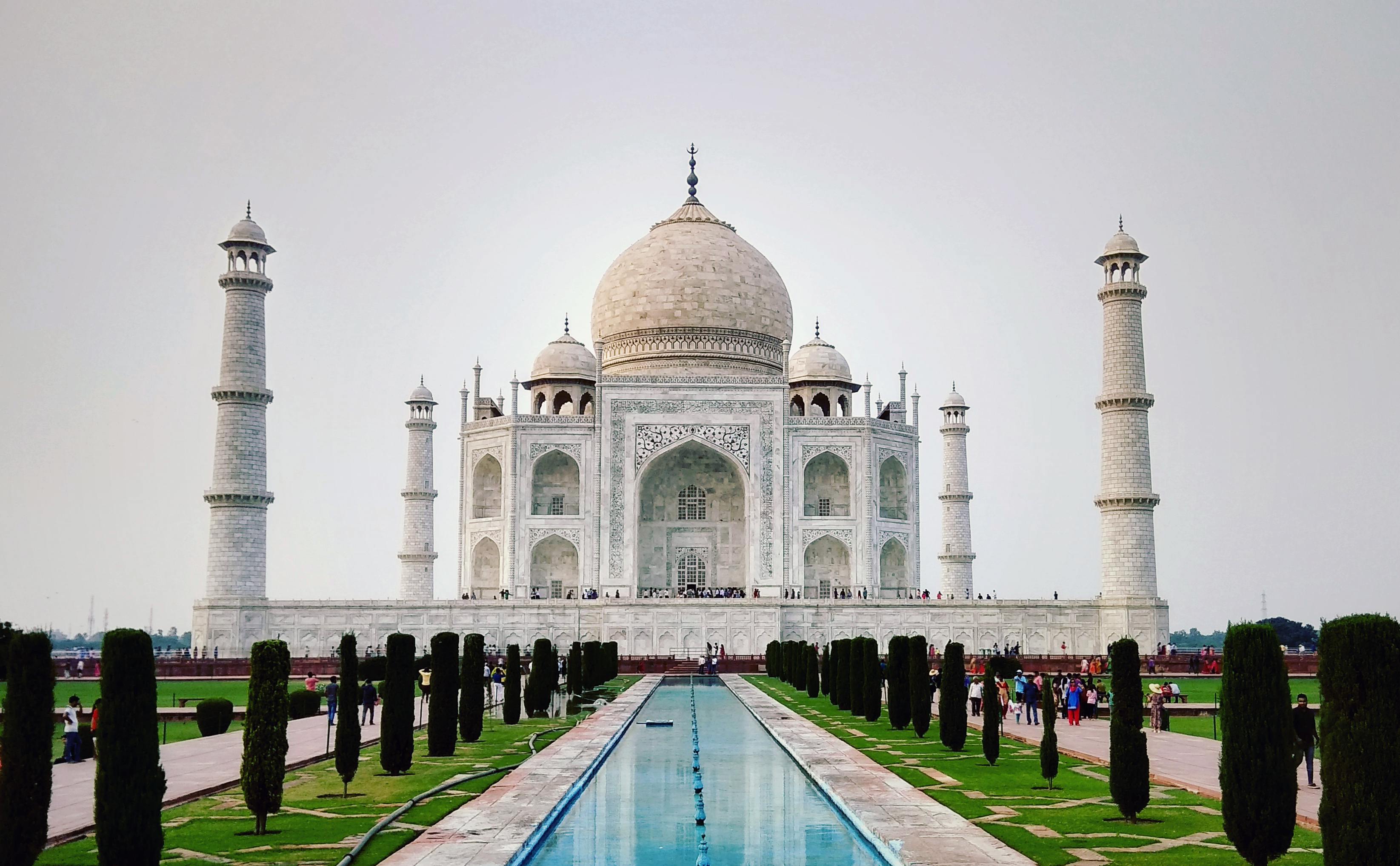
Beyond the Marble: The Storyscape Tour of the Taj Mahal
The Taj Mahal is a monument the world feels it knows—but few ever encounter. Its photographs fill postcards, desktops, and travel brochures, yet none of these images ever come near to conveying the layers of history, emotion, craft, and human stories that live inside its marble veins. Sights and information are typically used to describe a tour of the Taj Mahal. But the Taj Mahal Storyscape Tour goes beyond that. It is a voyage through love, grief, architecture, devotion, poetry, and the spirit of an empire, not a tour. It is an unraveling of time, a gradual trip through the heart of a story that has lived for nearly four centuries.
This thorough investigation takes you beyond the monument's obvious beauty and into the world that gave rise to it, including the empire that envisioned it, the brilliant brains that constructed it, the artistic talent that molded it, and the emotional environment that served as its inspiration. The Taj is not only a tomb; it is a storytelling canvas. Every stone in the Yamuna whispers, every carving contains a memory, every shadow has a purpose, and every reflection brings you a bit closer to the past.
This is Beyond the Marble.
The Taj Mahal as a Living Story
Most people arrive at the Taj Mahal hoping to see an architectural wonder. The Taj undoubtedly provides that. But what makes this monument so universally powerful is not its symmetry alone—it is the story hidden inside it. The Taj Mahal is an emotional work of art. It is a poetry sculpted in stone. It is the echo of a love that outlived its owners.
When you approach closer to the Taj Mahal, you are not entering a historical site; you are stepping into a live narrative. Every line of this narrative is told via its architecture, its gardens, its water courses, its carved marble, and the silence that clings in the air long after the crowds fade.
The size, scale, or majesty of many monuments across the world can astound you. But very few can speak to your emotions, your imagination, and your sense of awe in the way the Taj Mahal does. The Taj Mahal is more than just a place to see, which is why the Storyscape Tour was created. It is something to listen to, experience, and fully comprehend.
A Dawn That Changes Everything
Imagine yourself standing at the Taj Mahal's entrance before dawn to start this journey. The marble shimmers softly like the moon, the sky is ink-blue, and the only sound in the quiet is the early guests' delicate footsteps. As the first rays of light strike the dome, the Taj Mahal transforms magically. Silver turns into gold, blush-pink, and eventually pure white.
No camera can faithfully depict this metamorphosis. It is a moment made for the heart, not the lens.
On the Storyscape Tour, this sunrise is more than a stunning spectacle—it is the beginning of learning what Shah Jahan intended when he envisioned the Taj. He was not only creating a mausoleum. He was building a voyage of light, shadow, and metamorphosis. Tender in the morning, bright in the afternoon, mystical at dusk, and tranquil under the moon, the Taj's color changes throughout the day to represent the various moods of human love.
As the sun rises, the story begins.
A Walk Through the Mughal Imagination
The Storyscape Tour leads you through the Charbagh, a four-fold garden modeled after Persian paradise gardens, along the complex's center path. This is symbolic narrative, not only gardening. The garden reflects the Islamic vision of Jannat, or endless paradise, which Shah Jahan believed Mumtaz Mahal deserved to rest in.
Walking through these gardens is a journey between two different worlds, not just a leisurely stroll. The outside world stays behind. With its poetry, romance, art, and inventiveness, the world of the Mughal court gradually comes to life.
You discover how nature was incorporated into the architecture of the Mughal kings. You learn why symmetry, water, and reflection were so important to them. You see how the Taj Mahal is not a solitary structure—it is a part of an ecosystem of meaning.
The Human Heart Behind the Marble
At the center of the Taj Mahal is a love story that has frequently been idealized, sometimes embellished, and occasionally misinterpreted. Mumtaz Mahal, the cherished wife of Emperor Shah Jahan, was not only a queen; she was his closest friend, counselor, and companion through war, politics, and daily life. Their marriage lasted 19 years, during which she accompanied him everywhere—even on military operations.
When she passed away giving birth to their 14th child, Shah Jahan’s world collapsed. In Shah Jahan's instance, grief turned into building, despite the fact that grief is typically mute. Sadness turned into marble. Grief created a monument that defied time.
Your perspective of the Taj is altered when you comprehend this emotional basis. It is not a symbol of perfect love—it is a symbol of great loss and desire. Letters, court documents, and traveler testimonies that detail Shah Jahan's mental state over the years he oversaw the building are revealed via the Storyscape Tour. It demonstrates how poetry affected architecture, how loss sparked creativity, and how profound love may take on unexpected forms.
The Taj Mahal was not constructed with celebration in mind. It is a monument made out of anguish.
Inside the World of Dreamers, Architects, and Artists
One of the most fascinating features of the Storyscape Tour is the voyage into the thoughts of the individuals who created the Taj Mahal. The monument was created by a team of over 20,000 artisans, brought in from different corners of the world. They included Persian calligraphers, Central Asian inlay specialists, Indian sculptors, Afghan stonecutters, and Rajasthani marble artisans.
You discover:
- Ustad Ahmad Lahori, the master architect
- The Persian calligraphy Amanat Khan, whose signature still adorns the Taj
- The pietra dura artists who produced floral mosaics from semi-precious stones
- The mathematicians and engineers who attained perfect symmetry
- Marble sculpted so finely that it looks translucent
Understanding their stories adds substance to the monument. The Taj becomes not simply a symbol of love but a celebration of human talent and ingenuity. It demonstrates how engineering, geometry, science, poetry, and artwork all fit together like the parts of a large puzzle.
The Marble's Secrets
The Storyscape Tour draws attention to elements that most tourists overlook as you approach the Taj. Among them are:
- Architectural optical illusions
- Calligraphy that appears absolutely uniform by enlarging upward
- Moonlight-filtering marble panels that resemble lace
- Precision-carved stone flowers that mimic actual petals
- Verses from the Quran that narrate divine themes
- Symmetry disrupted purposefully at the cenotaphs, signifying human imperfection
The Taj is a living encyclopedia of Mughal art because of these unnoticed intricacies. They shift your understanding from “This is beautiful” to “This is genius.”
The Yamuna: The Quiet Witness of the Taj Mahal
Behind the Taj Mahal flows the Yamuna River, generally neglected by visitors but important to the architecture. The river is not a backdrop—it is a character in the drama. Its serene waters provide Taj Mahal reflections that resemble glistening mirages. The Mughal dynasty considered rivers sacred and symbolic of life, purity, and eternity.
You may admire the Taj Mahal from across the Yamuna by taking the Storyscape Tour. This viewpoint exposes a new level of beauty that is profoundly poignant but seldom witnessed. It also introduces the story of the famous Black Taj Mahal, a myth that continues to intrigue travelers and historians.
The Emotional Core: The Main Mausoleum
Entering the mausoleum is a heart-stopping experience. The marble walls bend around you like a haven, the air cools, and the sound becomes softer. At the center lie the cenotaphs of Shah Jahan and Mumtaz Mahal (their actual tombs lay below the floor).
This room is not about grandeur; it is about passion. It is poignant, silent, timeless. Here, people don't talk loudly. They whisper. Some stand immobile, others close their eyes. This is when the story achieves its emotional climax—the reunion of two souls who created history through love and tragedy.
Stories That Continue Beyond the Taj
The monument is not the end of the Storyscape Tour. It goes on to examine the Taj Mahal's centuries-long impact on poets, artists, travelers, architects, and empires. You find out:
- How the Taj inspired European tourists in the 17th century
- How Mughal miniature paintings depict it
- Rabindranath Tagore compared it to a "teardrop on the cheek of time."
- How it withstood colonial authority, invasions, and wars
- How it came to represent love on a global scale
Additionally, you investigate how the Taj is viewed in the contemporary world through digital culture, architecture, tourism, photography, and film.
A Journey That Changes You
What makes the Taj Mahal Storyscape Tour remarkable is that it doesn’t only teach you information. It makes you perceive the monument as a dynamic story—one created by human emotion, creativity, commitment, and tenacity.
You leave with:
- A deeper grasp of the Mughal era
- A revitalized admiration for artistic excellence
- A link to the monument's emotional core
- A sense of wonder that lasts long after you’ve left its gates
The Taj Mahal becomes more than just a building; it becomes a sensation, a memory, and a part of your own narrative.
Thoughts: The Taj Mahal from the Perspective of Contemporary Travelers
As the voyage concludes, and you take your final glance at the Taj Mahal, it appears different from when you entered. You no longer see merely marble—you see meaning. You see a love that shaped a monument. You see a dream built out of sadness. One masterwork that combines centuries' worth of art and culture.
You understand why millions of people go there each year, yet every visitor has a unique tale to tell. Because there are numerous stories about the Taj Mahal.
Additionally, you have entered the core of the story itself by taking the Storyscape Tour, which takes you beyond the marble.